

Overview
Recent data and analysis on bicycle racing tire width show a shift toward wider tires (28mm to 40mm) for performance gains, challenging the traditional preference for narrower tires (23mm to 25mm). Below is a summary of key findings based on available evidence, focusing on rolling resistance, aerodynamics, weight, and overall performance in racing contexts.
Rolling Resistance
Wider Tires Reduce Rolling Resistance: Wider tires (e.g., 30mm to 40mm) can have lower rolling resistance than narrower ones (e.g., 26mm) when optimized for pressure. A 2024 test of Pirelli P Zero Race TLR tires (26mm vs. 30mm) showed that at the same pressure, the 30mm tire required less power to maintain speed on indoor rollers due to a shorter, wider contact patch that deforms less. However, when pressures were adjusted to equalize contact area, rolling resistance was similar across widths. https://icancycling.com/blogs/articles/what-is-rolling-resistance-tire-comparison
Surface Matters: On rough surfaces (e.g., cobbles), wider tires excel, with an 80-watt swing in efficiency from 26mm to 40mm tires. On smooth asphalt, the advantage is smaller but still present, especially at lower pressures. https://www.cyclingnews.com/features/lab-tested-40mm-road-tyres-are-faster-for-nearly-everyone-and-heres-why/
Supple Casings Are Key: High-performance tires with supple casings (e.g., high-thread-count cotton or lightweight nylon) reduce energy loss from vibrations and deformation, making tire construction as critical as width. A 2020 study by Rene Herse found that 32mm tires rolled as fast as 25mm or 28mm tires when using supple casings, with no speed penalty up to 54mm on smooth roads.
Aerodynamics
Trade-Offs with Wider Tires: Wider tires increase frontal area, leading to aerodynamic drag, especially at high speeds. A 2025 Cyclingnews test showed a 1-watt penalty for 40mm tires at 20 kph, rising to 21 watts at 50 kph compared to 26mm tires. However, modern aero-optimized rims (e.g., Zipp 303 XPLR with 40mm external width) reduce this penalty, making wider systems competitive.
Wheel-Tire Integration: Pairing wider tires with rims designed for them (e.g., 30mm or 40mm external rim width) minimizes aerodynamic losses. Tests with Pirelli P Zero Race TLR tires (26mm to 40mm) on matching rims showed that the rolling resistance gains often outweigh aero penalties on real-world roads.
Tire Weight
Minimal Impact: Wider tires are slightly heavier, but the difference is small. For example, a Zipp 303 XPLR wheelset with 40mm Pirelli tires is 144 grams heavier than a 30mm setup (including sealant). On a 5km, 15% grade climb at 250 watts, this adds less than 5 seconds, suggesting weight is not a significant drawback for most racing scenarios.
Acceleration Myths: Bicycles accelerate slowly compared to cars, so small weight differences in tires have negligible effects on performance, even in sprints. Professional racers stick to 700C wheels over smaller, lighter options for better handling, not weight savings.
Other Performance Factors
Comfort and Traction: Wider tires at lower pressures (e.g., 40 psi for 40mm tires) improve comfort and grip, reducing fatigue and enhancing cornering on varied surfaces. This is critical in races with rough sections, like Paris-Roubaix, where pros average 42.3 kph on cobbles.
Puncture Resistance: Wider tubeless tires with sealant offer better flat protection, a significant advantage in long races or rough conditions. For example, Schwalbe Pro One TLE (28mm) was tested at 40 psi on gravel without issues.
Frame and Rim Compatibility: Modern race bikes accommodate wider tires (up to 40mm), and rims with internal widths of 18–22mm optimize performance for 28–40mm tires. Mismatched rims (e.g., narrow 17mm rims with 25mm tires) reduce efficiency.
Contextual Analysis
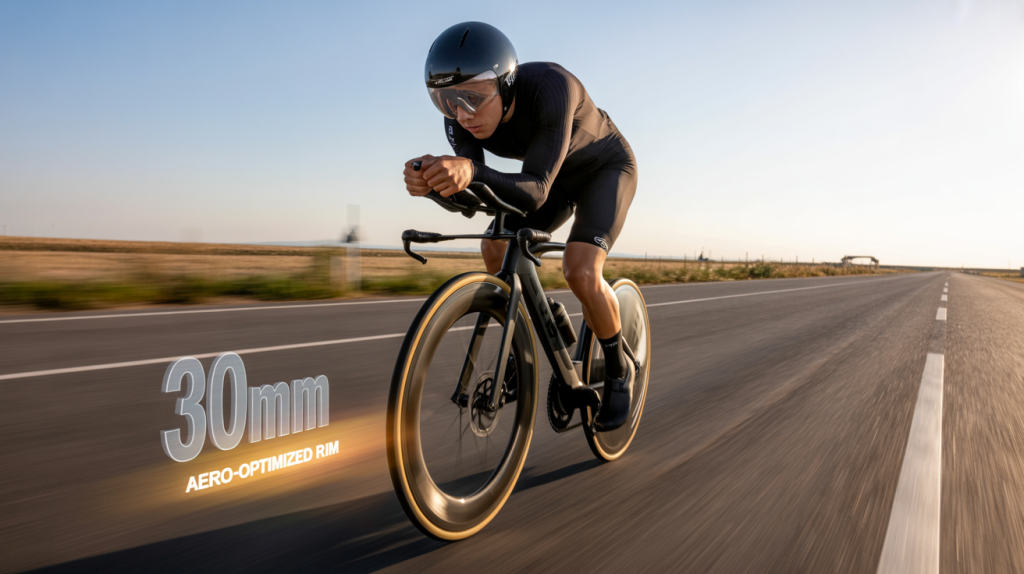
Race Type and Surface: Wider tires (30-40mm) are faster for most amateur and professional road races on imperfect roads, where rolling resistance gains and comfort outweigh aero losses. On smooth courses or solo breakaways at high speeds (e.g., time trials), narrower tires (25-28mm) may still be optimal due to aero advantages.
Tipping Point: No clear upper limit exists yet, but 40mm tires are not the performance ceiling. Tests suggest even wider tires (e.g., 48mm or 55mm) could yield gains on rough surfaces, though aerodynamic and frame design constraints may eventually limit benefits.
Professional Trends: Pro pelotons have shifted from 23mm to 25-28mm tires, with some using 30mm for specific races (e.g., cobbled classics). This reflects lab and real-world evidence favoring wider tires for speed and reliability.
Critical Perspective
While the data leans heavily toward wider tires, much of the testing comes from industry-affiliated sources (e.g., Pirelli, Zipp) or enthusiast publications, which may emphasize trends that align with marketable products. Independent studies, like those by Rene Herse, corroborate these findings but stress that tire construction (supple casings) is as critical as width. Aerodynamic penalties are also speed-dependent, so claims of universal gains from wider tires oversimplify the issue. Riders should consider their specific race conditions, speeds, and bike setups.
Bicycle Racing Tire Width Conclusion
For most bicycle racing scenarios in 2025, 30-40mm tires offer performance gains over 23-28mm tires due to lower rolling resistance, better comfort, and improved traction, especially on rough roads. Aero penalties are mitigated by optimized wheel-tire systems, and weight differences are negligible. However, for high-speed, smooth-surface events like time trials, 25-28mm tires may still be preferable. Riders should match tire width to rim width, prioritize supple casings, and adjust pressures based on surface and speed for optimal results.