
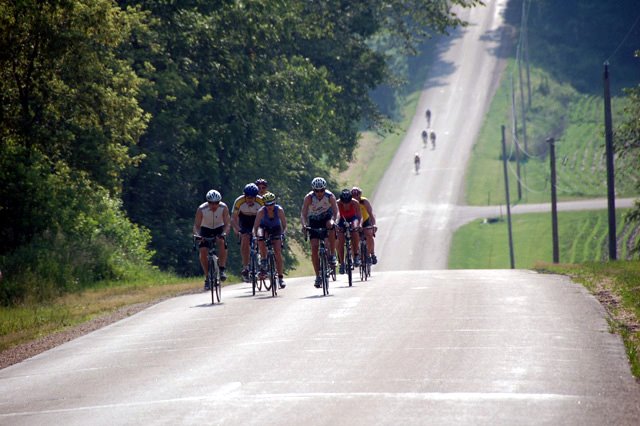
Looking for a challenging bicycle event? Try the L’Alpe Bl’Huez Hill Climb TT. The course is approximately 10.02 miles with 1,189 feet of elevation gain according to the Strava race event profile. The course begins with a long, fast section for the first 7 miles, including a 3 mile descent to the first climb. The climbs range from moderate (1.5–5.4%) to steep (8.1–10%), with hort but intense segments leading up to the finish line (10%-12.1%). This profile prioritizes versatility in gearing to account for the rolling sections and descents in the first 7 miles and low to very low gears for the final 3 miles of the climbs to the finish.
For those of you who have never done this race, the following article provides information on the course profile and suggested gearing that you may find helpful when setting up your bike for the race. The baseline setup is a Merckx San Remo 76 (14.5 lbs) road bike with Shimano Ultegra Di2 medium cage derailleur, 2x compact drivetrain with 50/34t chainrings, an 11-32t 11-speed Ultegra cassette, Zipp 202 wheels with 24 mm Continental Force Comp tubular tires, and a 145 lb rider.
L’Alpe Bl’Huez Hill Climb Course Recap (According to Strava)
- Total Distance: ~10.02 miles.
- Total Elevation Gain: ~1,189 ft
- Key Climbs:
- Moderate: Full Mound climb (2.01 mi, 6.8%), ClimbDuro 3rd Segment (2.26 mi, 5.3%), Mounds Park Road Climb (3.33 mi, 4.9%), Blue Mounds (3.45 mi, 4.5%).
- Steep: BM To the Top (0.14 mi, 12.1%), Bluemound Guardhouse to Top (0.33 mi, 10%), Unnamed Rd Climb (0.59 mi, 9.2%), Mound Pk Rd SB Ev1 (0.90 mi, 9.1%).
- Terrain: Smooth, paved roads.
- Event: Time trial.
- Bike Setup: Merckx San Remo 76 (14.5 lbs) with Shimano Ultegra Di2 medium cage derailleur, 2x compact drivetrain with 50/34t chainrings, an 11-32t 11-speed Ultegra cassette, and Zipp 202 wheels with 24 mm Continental Force Comp tubular tires.
Opening Section: 4 miles of Flat with Rolling Sections (1.5%) and 3 mile descent to the first climb
- Gears: 50×11 to 50×14.
- 50×14: For opening segment or if slight headwinds, yields ~22.2 mph (35.7 kph) at 90 RPM.
- 50×12: For the 1.5% gradient, yields ~25.9 mph (41.7 kph) at 90 RPM.
- 50×11: For the 3 mile downhill stretch, yields ~28.3 mph (45.5 kph) at 90 RPM or ~31.4 mph (50.6 kph) at 100 RPM.
- Strategy: Adopt a low, aerodynamic position (e.g., forearms near parallel to ground. Push 90–100 RPM to maximize speed. Shift to 50×12 or 50×14 if the 1.5% gradient feels taxing or you encounter wind resistance.
Second Section: Moderate Climbs (4–8%)
- Segments: Full Mound climb (2.01 mi, 6.8%), ClimbDuro 3rd Segment (2.26 mi, 5.3%), Mounds Park Road Climb (3.33 mi, 4.9%), Blue Mounds (3.45 mi, 4.5%).
- Gears: Use 34×18 to 34×22.
- 34×20: Ideal for 5–7% gradients (e.g., Full Mound climb at 6.8%), yields ~8.2 mph (13.2 kph) at 90 RPM or ~7.3 mph (11.7 kph) at 80 RPM. This gear balances power and cadence for longer efforts.
- 34×18: For slightly flatter sections (e.g., Blue Mounds at 4.5%), yields ~9.1 mph (14.6 kph) at 90 RPM, suitable for high power output.
- 34×22: For steeper moments within these climbs, yields ~7.5 mph (12.1 kph) at 90 RPM.
- Strategy: Maintain 85–95 RPM to optimize power over these longer climbs. Shift between 34×18 and 34×22 to match gradient changes and sustain consistent wattage.
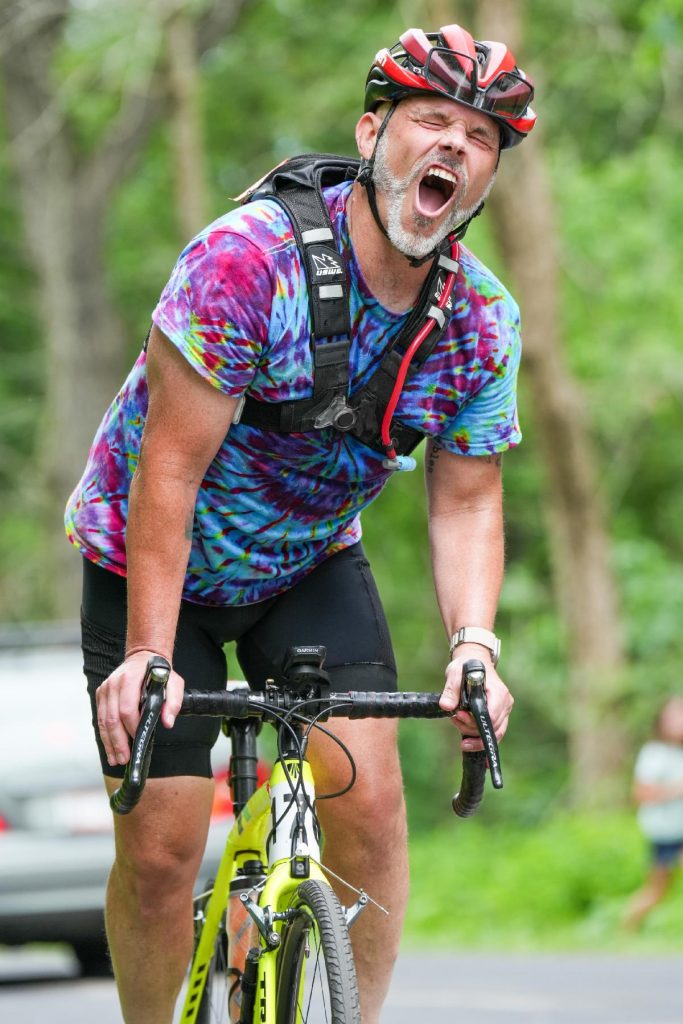
Final Section: Steep Climbs (9–12.1%)
- Segments: BM to the Top (0.14 mi, 12.1%), Bluemound Guardhouse to Top (0.33 mi, 10%), Unnamed Rd Climb (0.59 mi, 9.2%), Mound Pk Rd SB Ev1 (0.90 mi, 9.1%).
- Gears: Use 34×28 or 34×32.
- 34×28: For 9–10% gradients, yields ~5.8 mph (9.3 kph) at 90 RPM. Fit riders may prefer this gear and push slightly harder while staying seated.
- 34×32: For the steepest sections (BM To the Top), yields ~5.2 mph (8.4 kph) at 90 RPM or ~4.6 mph (7.4 kph) at 80 RPM. This gear preserves leg strength and maintains cadence on short, intense climbs.
- Strategy: Stay seated to maintain traction. Spin at 80–90 RPM to avoid lactate buildup. Shift to 34×28 for 9–10% sections to optimize power, then to 34×32 for the final, brief 12.1% gradient.
Why This Setup Works
- Course Demands: The 11-32t cassette’s wide range (32t for 12.1% climb, 11t for flats/descents) covers the course’s varied terrain. The 34t inner ring aides spin efficiency on steep sections, while the 50t outer ring maximizes speed on the flats, gentle climbs (1.5%) and descents.
- Time Trial Focus: The gear spacing of an 11-speed 11-32t cassette (e.g., Shimano: 11-12-13-14-16-18-20-22-25-28-32) allows cadence adjustments, critical for maintaining consistent power output in a TT. The 50×11 top gear supports high speeds, while 34×32 handles short, steep climbs without disrupting your rhythm.
- Tire Synergy: 25–28mm tires (e.g., optimized via SILCA Tire Pressure Calculator) complements this gearing. Lower pressures (e.g., 70–75 psi for 28mm tires, ~80 kg rider) enhance grip on steep climbs, while the 50×11 gear leverages low-rolling-resistance tires for speed on flats.
Additional Tips for the L’Alpe Bl’Huez Hill Climb
- Cadence: Target 85–95 RPM on climbs to balance power and efficiency, and 90–100 RPM on flats/descents to maximize speed. A fit rider may tolerate 75–80 RPM briefly on steep climbs (e.g., 34×28), but avoid dropping below 70 RPM to prevent fatigue.
- Aerodynamics: Keep your head low and elbows in on the flats to reduce drag. On climbs, stay seated for 4–8% gradients; stand briefly on 10–12% sections only if needed to maintain cadence.
- Tire Pressure: Use the SILCA calculator for 25–28mm tires. For an ~80 kg rider, set ~70–75 psi (28mm) or ~75–80 psi (25mm) for grip on climbs and efficiency on flats. Lower by ~5 psi if roads are wet.
- Component Check: Confirm your derailleur cage can handle 11-32t gearing. Ensure chain length accommodates 50×32 and 34×11 combinations to avoid slack or tension issues. Check the chain alignment for both the 11t and 32t gears.
L’Alpe Bl’Huez Hill Climb Final Notes
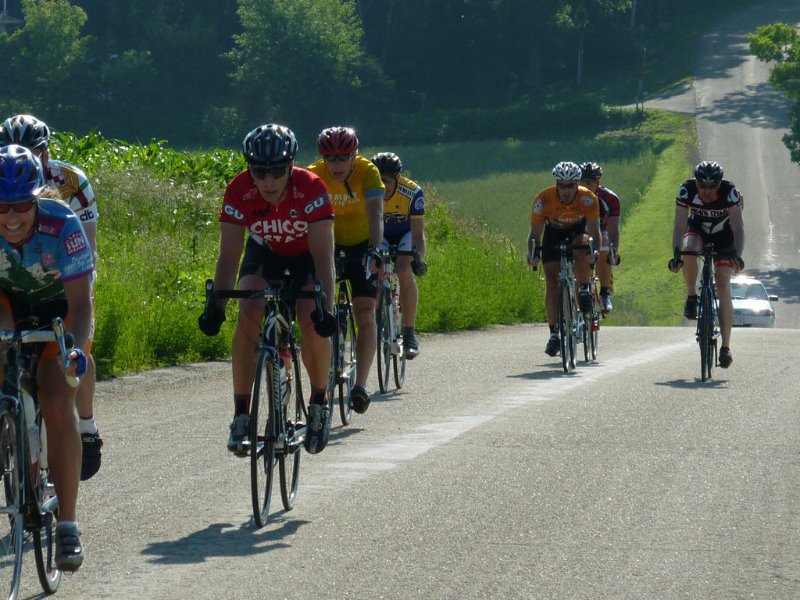
The L’Alpe Bl’Huez Hill Climb TT is a real challenge and a very unique event. Proper bike setup, gearing, and race strategy are key considerations for this event. The 50/34t chainrings with an 11-32t cassette are well-suited for such a hilly time trial, offering low gears (34×32) for the 12.1% climb and high gears (50×11) for flats and descents. Leverage the 34×28 on 9–10% climbs and 50×12 on the 1.5% section, maintaining 85–95 RPM for efficiency. Come join us for the Alpe Bl’Huez Hill Climb TT.
Doesn’t this sound like a lot of fun? Join us at the event.
Frequently Asked Questions
The L’Alpe Bl’Huez Time Trial’s 10.02-mile course demands a split pacing strategy: 7 miles of flat/rolling (1.5%) and a 3-mile descent, followed by 3 miles of climbs (4.5-12.1%). For the opening 7 miles (County ID west to K north), push 90–95% of your functional threshold power (FTP) or 5-10 bpm below heart rate threshold, aiming for 22-28 mph (50×11-14, 90-100 RPM) on a time trial or aero road bike, as the course favors aero equipment here. On the descent, tuck tightly to hit 28–31 mph (50×11, 100 RPM). For the final 3 miles (Full Mound, Mounds Park Rd., Blue Mounds, and steep segments like BM To the Top), target 80–85% FTP (e.g., 200-220W for a 70kg rider) and 85–95 RPM in 34×18-32 to sustain power on 4.5-12.1% gradients. Save energy for the final 0.33 miles (10-12.1%) to surge to the oak tree finish at 1710 feet. Practice 5×5-minute intervals at 95% FTP for flats and 3×10-minute hill repeats at 85% FTP on 9-12% gradients to prepare.
The course’s mix of flats, descents, and steep climbs (up to 12.1%) requires a versatile setup like the referenced Merckx San Remo 76 (14.5 lbs) with a 50/34T compact crankset and 11-32T cassette. For time trial bikes, prioritize aero bars and deep-section wheels (e.g., Zipp 202) for the 7-mile flat/descent section. For road bikes, use lightweight wheels and 25–28mm tubeless tires at 70-75 PSI (28mm) or 75-80 PSI (25mm) for an 80kg rider, per the SILCA calculator and your tire pressure interest, to balance grip on climbs and speed on flats. If using clinchers, choose latex inner tubes for lower rolling resistance, as you explored. 165mm cranks, per your prior questions, suit high-cadence racers (85-95 RPM) on the 9-12.1% climbs like BM To the Top, reducing hip strain. Ensure the derailleur (e.g., Ultegra Di2 medium cage) handles 34×32 and 50×11 without chain issues. Avoid unvented helmets in hot June weather (25-30°C) to prevent overheating, as noted in the event narrative.
The course’s smooth, paved roads (County ID, K, Mounds Park Rd., Mounds Rd.) support high speeds in the 7-mile flat/descent section, but the 3-mile climb has rougher patches, especially on steep segments like Mound Pk Rd SB Ev1 (0.90 mi, 9.1%). Use tubeless 25-28mm tires at 70-75 PSI (28mm) or 75-80 PSI (25mm) for an 80kg rider, as you explored in tire pressure questions, to ensure grip on climbs and efficiency on flats. In wet conditions (possible in June), lower pressure by 5 PSI for traction, especially on the 12.1% BM To the Top. Hot weather (25-30°C) risks overheating, so use a vented helmet, as warned, and carry a 500ml bottle with electrolytes. Headwinds on the exposed climb (e.g., Blue Mounds, 3.45 mi, 4.5%) can slow times, so tuck tightly on the 3-mile descent (50×11, 100 RPM) to save watts. Recon the course during training to anticipate rough sections and practice gear shifts (34×28-32) for 9-12.1% gradients.
For the 25–35-minute L’Alpe Bl’Huez Time Trial, eat a high-carb breakfast (80–100g carbs, e.g., oatmeal with fruit) 2–3 hours before your start time. During the race, sip a 500ml bottle with 30–40g carbs (electrolyte drink) through the 7-mile flat/descent section (County ID to K), and take a 25g carb gel at the climb’s base (Mounds Park Rd., ~15–20 minutes in) to fuel the 3-mile ascent (4.5–12.1%). Your interest in lightweight setups suggests using tubeless tires or latex inner tubes to reduce bike weight, preserving energy for climbs like BM To the Top (0.14 mi, 12.1%). In hot conditions (25–30°C), hydrate with 300–400ml water plus electrolytes to prevent cramping on steep gradients. Post-race, consume a 2:1 carb-to-protein shake (40g carbs, 20g protein) within 30 minutes at the event’s registration area. Test this plan in training rides mimicking the Strava profile’s 1,189-foot elevation gain.
To excel in the L’Alpe Bl’Huez Time Trial, train for a 25 to 35-minute effort split between high-speed flats/descents and steep climbs (4.5-12.1%). Perform 2-3 weekly sessions: 5×5-minute intervals at 95-100% FTP (e.g., 250-280W for a 70kg rider) to mimic the 7-mile opening (50×11-14, 90-100 RPM), and 3×8-10-minute hill repeats at 85-90% FTP on 9-12% gradients to simulate the 3-mile climb (34×18-32). Include one weekly 1-hour ride with 1000-1500 feet of elevation to build endurance. If using 165mm cranks, practice high-cadence climbing (90-95 RPM) to optimize efficiency on segments like Bluemound Guardhouse to Top (0.33 mi, 10%). Ride the course (Mounds Rd. to Blue Mound State Park) or similar terrain, as it’s a local training favorite per the narrative. Taper 5-7 days before the start date, reducing volume by 40% to peak fresh. Use Strava or Zwift to track progress against the course’s 1,189-foot elevation profile.